
3D Elevator Models: Turn Your Business Website into an Online Showroom
By Liftmira Engineering, Engineering Team · 4 min read · Updated Nov 19, 2026
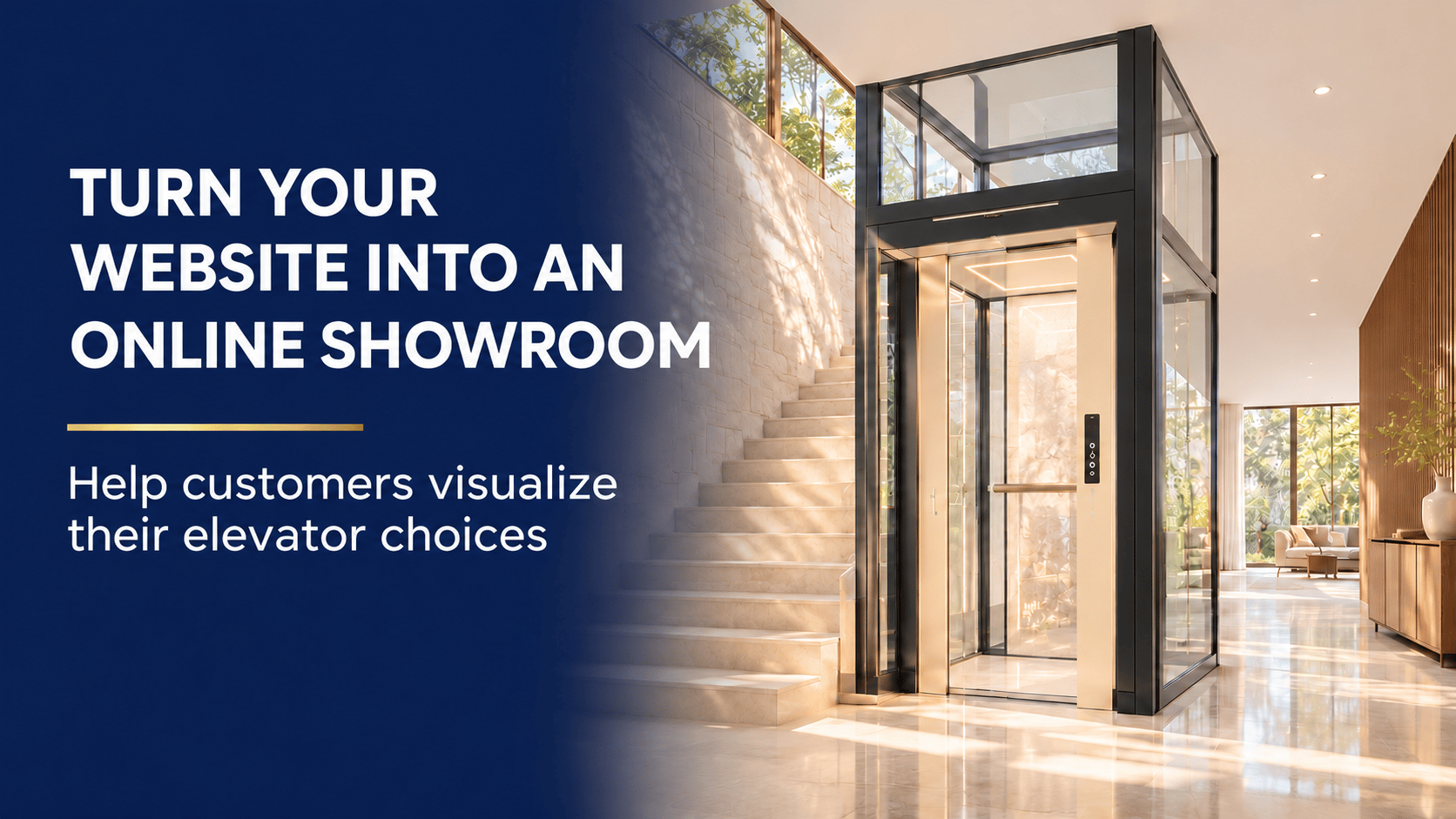
Customers looking for an elevator need more than information about its capacity, dimensions, or speed. They also want to picture what the cabin will look like, whether the colors and materials will suit their space, and how different options will change the overall design.
Catalogs, images, and technical drawings provide important information, but customers may still need to imagine how those pieces fit together. Interactive 3D models let them take the next step: rotate the cabin, zoom in on details, and explore available design options directly on the company’s website.
With this experience, a website can do more than present products. It can become an online showroom where customers explore elevator cabins before speaking with a sales team.
Help Customers Visualize Their Options
When viewing a 3D model, customers can see the cabin from different angles, zoom in on details, and try the colors, materials, or components configured for that model.
Rather than viewing each image separately, visitors can see the cabin as a whole, focus on the options that interest them, and better understand the differences between designs. This is especially useful for a product like an elevator, where there are many details to consider.
When customers can explore the product themselves, consultations have a more concrete starting point. Sales teams can discuss the cabin, materials, or details the customer is considering instead of relying only on verbal descriptions.
Create an Advantage for Online Sales
A company website is often one of the first places customers visit when researching elevators. 3D models give businesses a more interactive way to present products, allowing customers to view and explore them on the website.
This experience gives customers another reason to spend time learning about a product, while giving sales teams a visual tool to explain design options. For businesses, it is a way to upgrade online product presentation and stand out as customers compare different options.
Research on Online 3D Product Presentation
Several studies offer insight into why interactive product experiences may be useful for buyers.
In an experiment involving 207 participants, Choi and Taylor compared 2D and 3D presentations of watches and jackets. Overall, participants who viewed the 3D images reported more positive brand attitudes and purchase intentions. The differences varied depending on the product category and how much participants wanted to touch the product. Choi & Taylor, 2014
A study involving 366 participants examined 360-degree product rotation. It found that viewers could perceive products as more concrete and tangible than when viewing static images alone. This perception was associated with product evaluation and self-reported purchase intention. Verhagen, Vonkeman & van Dolen, 2016
Research on product configurators also suggests that an experience is more useful when customers can navigate, compare, and understand the available options. Sandrin et al., 2017
These studies focus on online product experiences; they do not specifically examine the elevator industry or Liftmira. They help explain how 3D interaction may support buyers as they visualize and evaluate products. Businesses should assess commercial outcomes using their own data.
Bring 3D Online Without Building an Entire System In-House
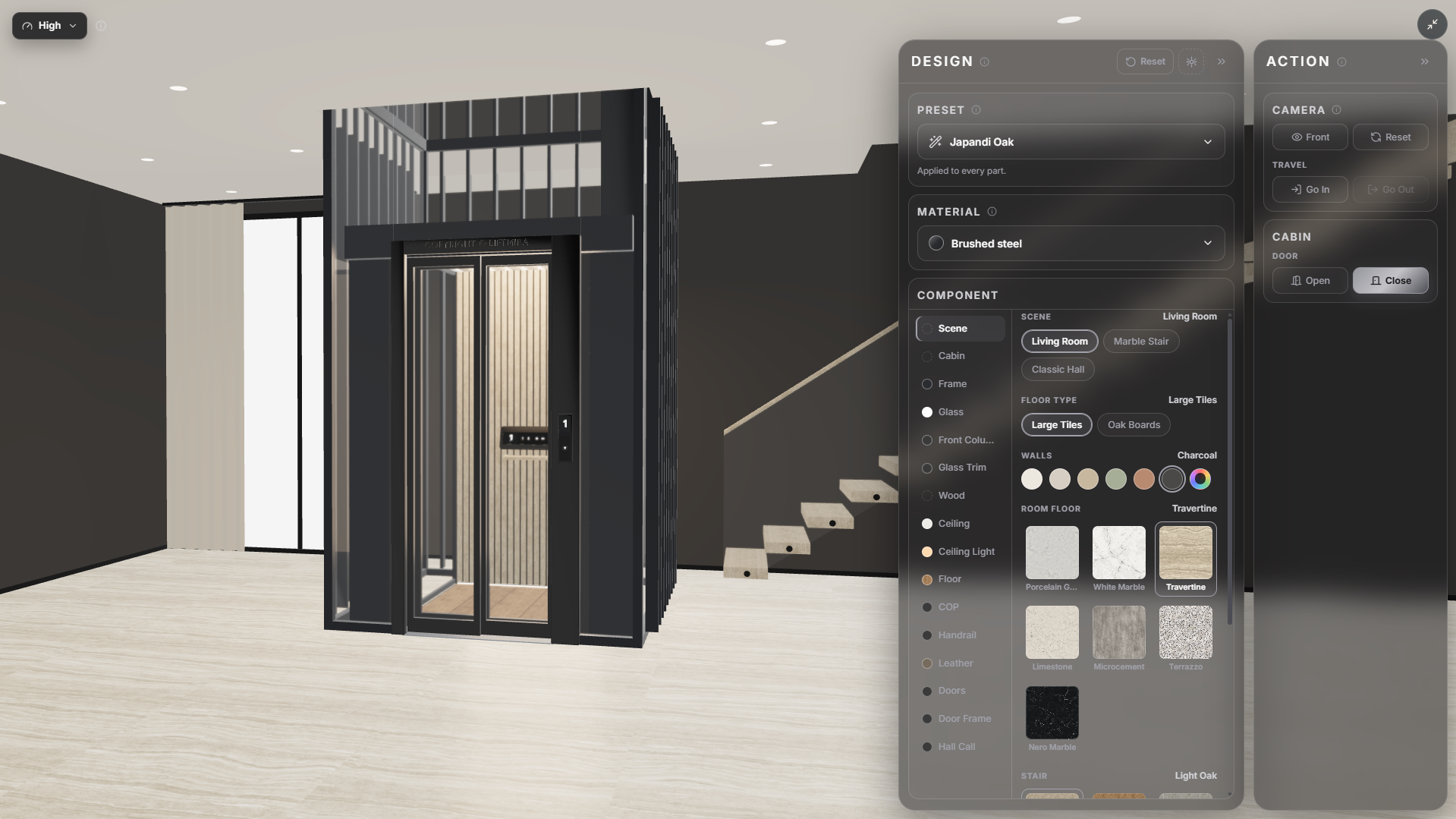
Large companies may have the resources to build their own product configuration systems. For many other elevator businesses, researching, developing, and maintaining a 3D platform from scratch can require significant investment in technology, people, and time.
Liftmira offers a different approach: businesses use a license key to integrate the 3D cabin experience into their own website, instead of building an entire configuration system themselves. This allows them to introduce interactive product presentation without starting with a dedicated platform development project.
This approach makes 3D configuration more accessible to businesses in the elevator industry, while allowing them to focus their resources on their products, customers, and sales activities. The specific technical approach depends on each company’s website configuration.
Belux Continues to Expand Its 3D Models
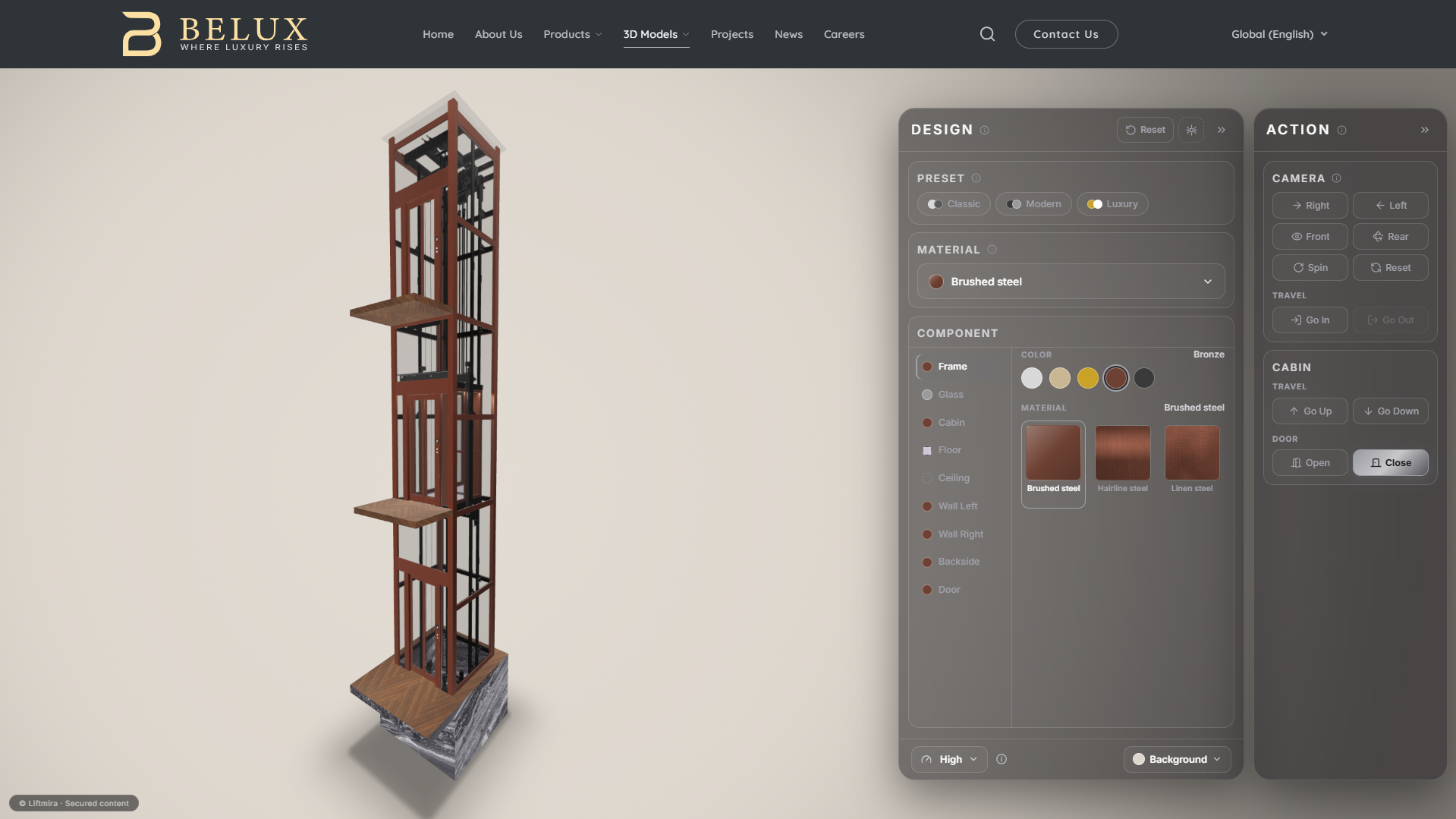
Belux began discussions with Liftmira in April 2025. By the end of October 2025, the first model-a four-floor Belux glass elevator had been deployed on the company’s website.
According to information shared by Belux, customers responded positively to the new product presentation format. Belux then decided to add two more models based on its existing drawings: an infinity-glass cabin and a curved-glass cabin.
Belux’s decision to add more models shows how the company is expanding its use of 3D experiences to present its products. It is an example of a business bringing interactive cabin models to its website and developing the experience alongside its product range.
Try It Before You Decide
Under Comnosoft’s current program, new businesses can try one model from the Liftmira library for one month, with integration and maintenance fees waived during the trial. If a business wants a custom model, the modeling fee is quoted based on the scope of work.
Businesses can start by exploring the demo, identifying suitable models, and evaluating how 3D models can support product presentation on their website.
3D models give elevator businesses a more interactive way to present products: customers can explore cabins on their own, while sales teams gain another tool for discussing design options. With Liftmira, businesses can introduce this experience without developing an entire 3D configuration system from scratch.
Liftmira Engineering The Liftmira Engineering team builds and maintains the platform, SDKs, APIs, and infrastructure that power immersive 3D commerce experiences. We publish technical guides, integration tutorials, architecture deep dives, and product updates for developers.